
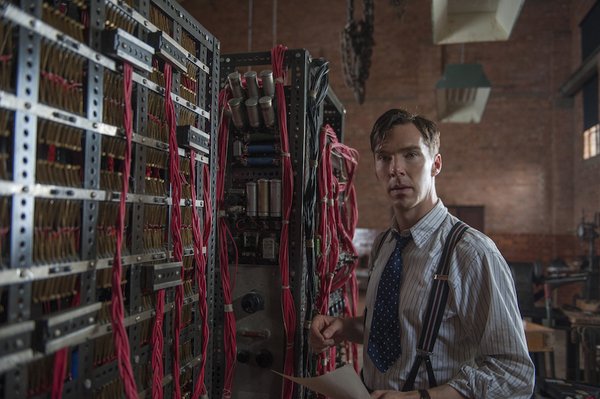
Alan Turing’s story is one that definitely should be told, but it’s one that should be told through an actual movie, not through a collection of meandering scenes that happen to be next to each other. The Imitation Game wants you to be moved, to be fascinated, to be able to learn something about Turing, but the problem is that the movie doesn’t know how to go about it. It attempts to tie everything together thematically, but its version of doing so consists of the “hammering the message over your head until you have no choice but to give it an Oscar” method.
Archive | Film RSS feed for this section
The Imitation Game Review
4 Jan
The Interview Review
25 Dec
This movie is going to be remembered for every reason except it being a good movie. It’s certainly not surprising that North Korea took offense to its release, nor is it surprising that Sony eventually decided to release it, but perhaps the most unsurprising thing about it is the fact that James Franco and Seth Rogen really like rectums. I’m assuming that during one of their coke-fueled bro sessions (I assume they have those in real life), they once again found their sixth-grade humor, thought about their luscious behinds, and decided to make a movie about peeing and pooping in North Korea.
Share this:

Two Days, One Night Review
23 Dec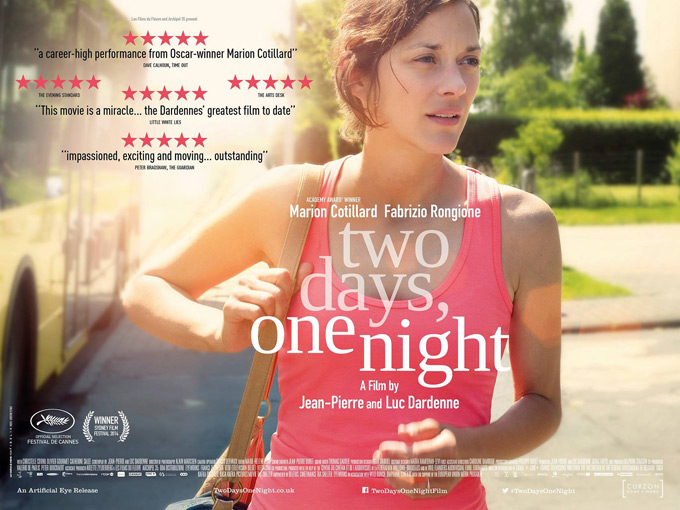
“You have to fight for your job.”
Two Days, One Night (or Deux jours une nuit) tells an elegant, profoundly affecting, and quietly wonderful story about a woman who takes control of her life and influences others in the process. It utilizes a simple narrative–Sandra, who works at a solar panel factory, has to persuade a majority of her 16 coworkers to vote for her keeping her job over them receiving their €1000 bonuses–and it’s better off for it, as this simplicity still allows us to witness a broad spectrum of humanity on display.
Share this:

Wild Review
15 Dec
“If your nerve deny you, go above your nerve.”
From first glance, Wild may seem like the kind of movie with a mind-blowing epiphany at the end, the kind of movie about oneness with nature or about a walk through an all-healing wilderness. However, it seems to be more about acceptance than it is about redemption, acceptance of who Cheryl Strayed is, every single ugly aspect–e.g. heroin addiction–included. At one point in the film, she asks: “What if I forgive myself? What if I was sorry?” Then, she goes on: “But if I could go back in time, I wouldn’t do a single thing differently. What if all those things I did were the things that got me here?” Ultimately, the walk is about life in general, about the hardships and the beauty and the ugliness that follow you wherever you go, and it’s about confronting and experiencing the world in its most natural form.
Share this:

Foxcatcher Review
8 Dec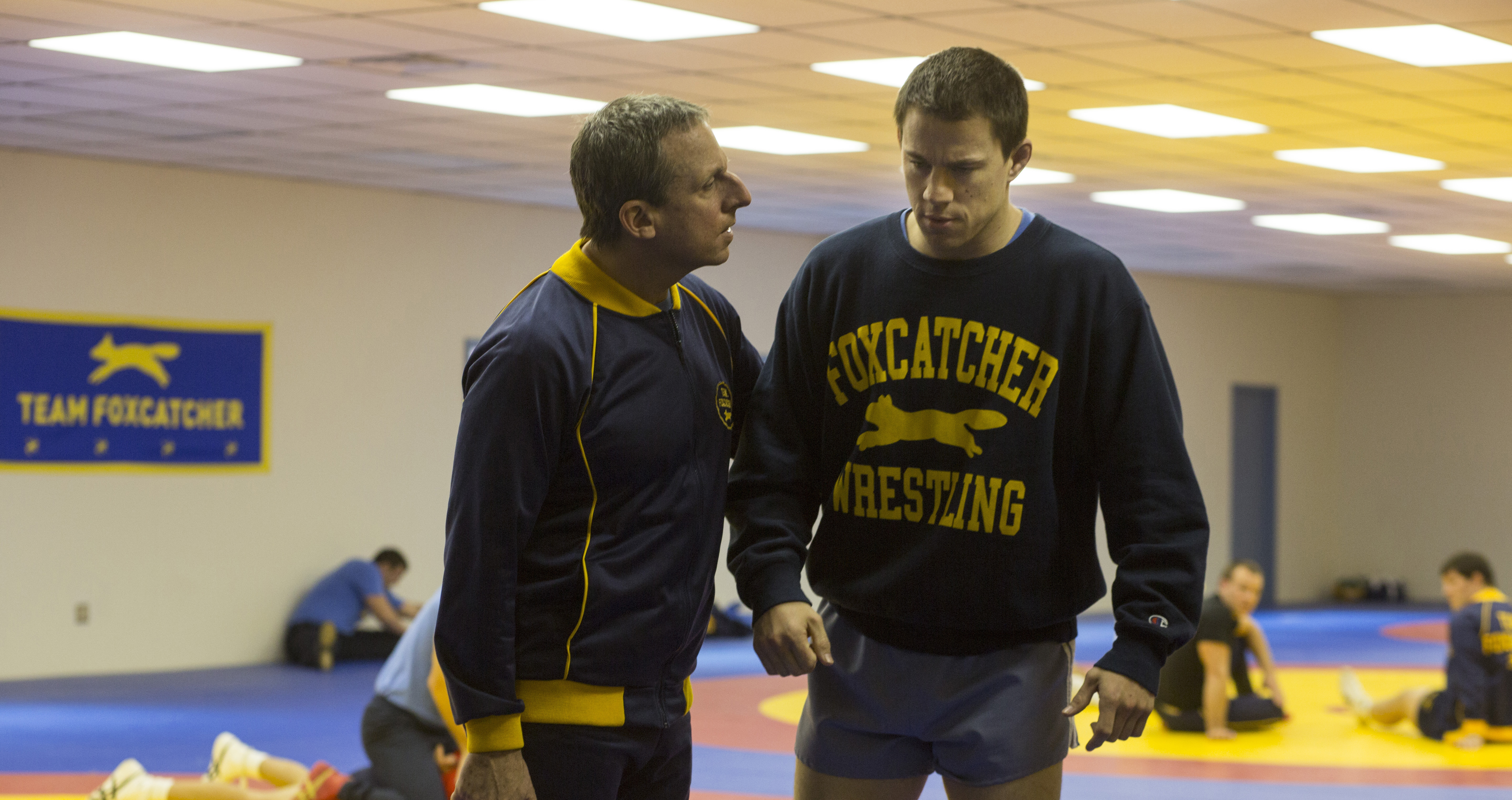
“How much does he want?”
“You can’t buy Dave.”
Upon hearing these words, John du Pont stares into the distance with a confused look on his face, unsure of what exactly he just heard. At the moment, he’s attempting to get Mark Schultz’s brother–Dave–to join them at Foxcatcher Farms, to get Dave to contribute to a possible gold medal at the 1988 Seoul Olympics. He eventually does, but this scene strikes at the foundation of John du Pont: the undercurrent of entitlement masquerading as patriotism and mentorship, the fact that du Pont’s treasure trove of wealth has led him to believe that he can buy and collect whatever he pleases.
Share this:

The Babadook Review
29 Nov
The Babadook is an original, frightening, and profoundly sad look at a woman’s psyche, at the effects of trauma, at the relationship between a mother and a son. It doesn’t shy away from certain staples of the horror genre; rather, it utilizes them in unique ways, taking cliches and structuring them around character instead of around plot or style. As a result, this is 90 minutes of engrossing psychological horror, a (scary) breath of fresh air in what is presently a very stale genre.
Share this:

Nightcrawler Review
17 Nov
“If you want to win the lottery, you have to make the money to buy the ticket.”
Lou Bloom may come across as an affable, equitable guy at first, but beneath that veneer is an absolutely vile person who will get what he wants without any regard for others. He is a sociopath, plain and simple, and any destruction he may leave behind merely catapults him to the next level. There’s no disputing that this is a successful man living in a twisted world, someone who will get up into the faces of victims, someone who will move bodies for better shots, and someone who will wear a goofy grin as he’s threatening you.
Share this:

John Wick Review
12 Nov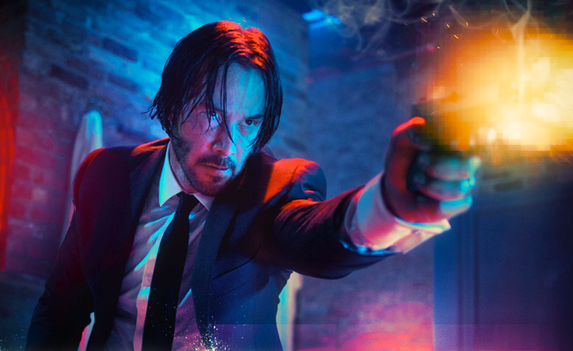
“I heard you punched my son. Why?”
“He stole John Wick’s car.”
“…Oh.”
That’s John Wick for you: darkly humorous, full of action, and made with its own rules in mind. This is far from perfect, but it’s the type of action film that isn’t produced enough these days, one that employs an incredibly simplistic structure, but one that still succeeds aesthetically and violently and creatively. It’s loads of fun, and it looks gorgeous.
Share this:



Birdman Review
2 Nov
“A thing is a thing, not what is said of that thing.”
Riggan Thomson was once a movie star, someone who donned a Birdman costume and raked in millions as fans scrambled over each other to buy their tickets. Now, he’s been replaced by the likes of Robert Downey Jr. and Michael Fassbender–both name dropped in the film–and is in the theater business, putting together Raymond Carver’s “What We Talk About When We Talk About Love”. He’s struggling to stay relevant, to still “exist”, in a world driven by social media and blockbusters and viral videos, and Iñárritu’s film becomes an examination of a man both driven and brought down by his ego, of a man whose earlier fame follows him around like a shadow.

 Polar Bears Watch TV
