This is a tough one. Parts of it are intense, full throttle filmmaking, the type of contained space pressure cooker that’s right up my alley. Other parts are exceedingly dumb, the type of faux profound grandstanding that spews from the mind of a guy who probably got a few too many pats on the back when he was younger. And no, just because certain elements of the script seem to deal with this notion of celebrity–and arguably with the meaning of Aronofsky’s own place in the world as a creative mind–that does not for one second excuse his poor choices. When I evaluate films that are ridiculous and campy like this one is at times, I wholly appreciate it if and only if I get the sense that the filmmaker understands and embraces what he or she is doing. From Aronofsky, I get the sense that his form of self awareness is a form of smug self-seriousness rather than a driver of the cinematic experience. Now, the Aronofsky Touch worked in Black Swan, but that’s because that film was a true psychological thriller, a more tightly structured piece that had more to say about fewer things.
Marjorie Prime Review
1 SepAn intriguing conceptual anchor dealing with the pliability and selectivity of memory, unfortunately reduced to listless conversations and underdeveloped characters. There’s an admirable attempt to build off of those themes via the unspooling of backstory against the backdrop of familial and generational dynamics, but there’s a clumsiness in the way it’s handled. Perhaps the translation from stage to film left some blanks that needed to be quickly filled, resulting in a weak script backing up a unique vision. Nevertheless, I came for Hamm and I left satisfied, and the film is at its best when it focuses on him and Marjorie (an excellent Lois Smith). There are two conversations that are decidedly not listless: the opening and closing scenes of the film, which mark the most interesting engagements with the subject matter. All around a solid production–Robbins and Davis deliver, and Williams as d.p. and Levi as composer are great choices–but it doesn’t quite reach the heights it strives for.
GRADE: B-
Columbus Review
17 AugThe best scene of Columbus is serene, yet dripping with emotion. It’s deeply passionate, a small slice of life that speaks volumes even though it’s as quiet as can be. I won’t give too much away here, but what sparks it is a question from one character to another about a building they’re standing in front of. It has to do with meaning, with personal connection, with finding something amidst the complicated assembling of inanimate objects. It has to do with your engagement with the world around you, and the value within that process is something that Kogonada certainly understands and connects to. That’s one of the more profound ideas that the film expresses, and it’s done so in a visually lyrical manner. Kogonada makes his human characters living, breathing elements of the architecture in the background, utilizing symmetry from both visual and character-based standpoints as Jin and Casey (Cho and Richardson, the latter of which is particularly incredible) wander through their environment.
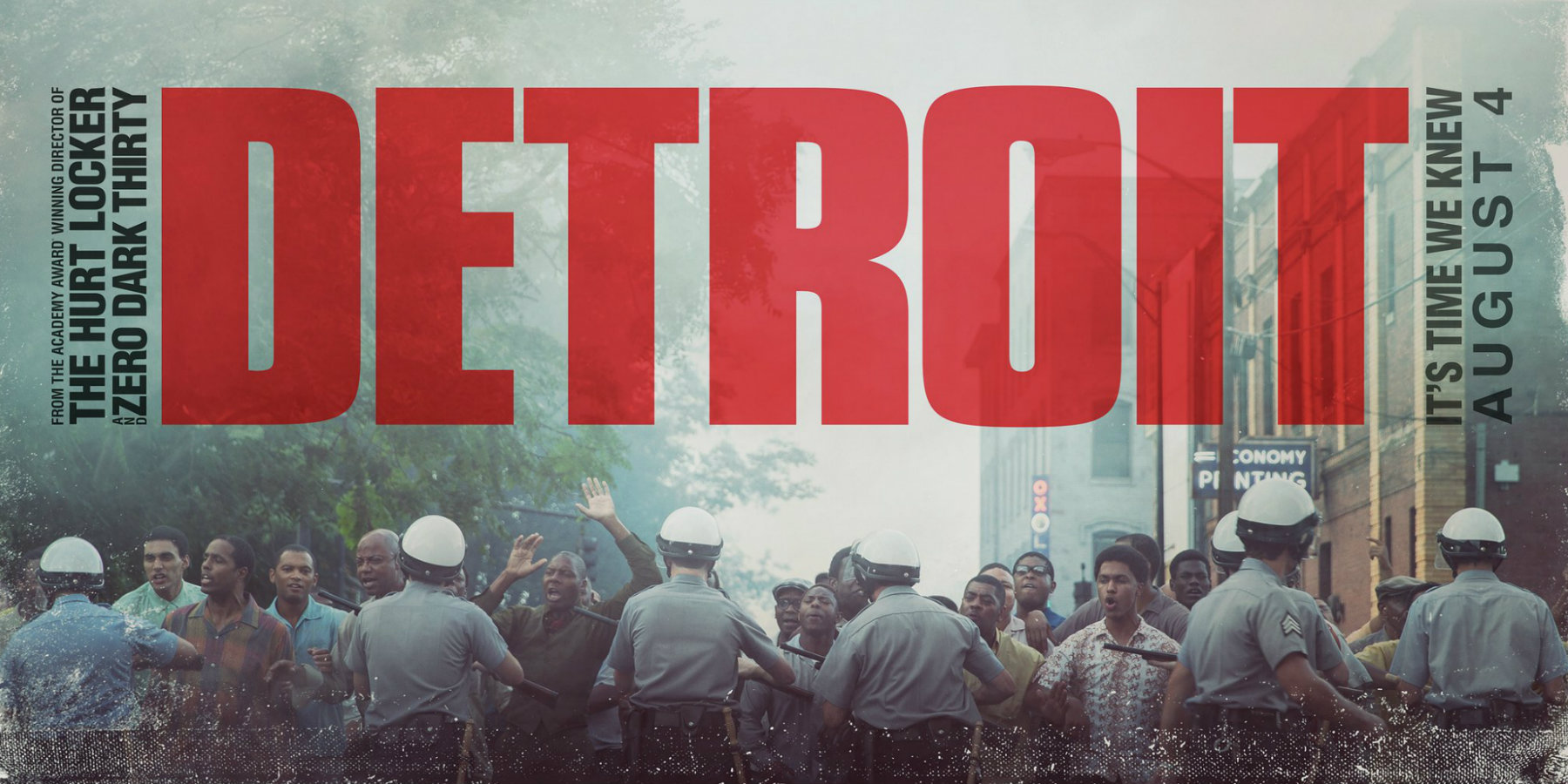
Detroit Review
6 AugIt’s easy to try to do too much with a historical film. As a filmmaker, you might feel the need to cast a wide net over the events in question, going down a laundry list of important events in an effort to do due diligence to history. I prefer the approach taken by Detroit, which zeroes in on the Algiers Motel and stays with it for over an hour. The film certainly provides context for the tensions that flare in that motel, opening the film with an excellent prologue that places you right in the heat of the Detroit riots. However, Bigelow’s concerns do not lie with the riots as a whole; rather, she and Boal are interested in how the backdrop of the riots feed into an event like the one at the Algiers Motel. The approach has some flaws, of course. Are there some meandering scenes with iffy dialogue? Yes. Are there moments a bit lacking in nuance? You bet. Does the character development sometimes fail to match up with the intense emotions we’re asked to feel for the characters? Sure. Are various perspectives omitted? Absolutely.
Dunkirk Review
23 JulLet’s get this out of the way first: Christopher Nolan is a very talented filmmaker. He and his brother have crafted several masterpieces in my eyes, and I have nothing but the utmost respect for his commitment to high(er) concept crowd pleasers. He gets a lot of shit, but his type of filmmaking is desperately needed in an age of mindless entertainment; how many other directors will garner such universal support from the studio, critics, film buffs, and casual moviegoers alike? Yeah, not many.
War for the Planet of the Apes Review
18 JulThere’s a tendency these days to qualify any evaluation of a blockbuster film with the word “blockbuster”. “It’s great for a blockbuster.” “It’s a smart blockbuster.” “It’s just a fun summer blockbuster.” This trend does not occurs sans reason: the big, lumbering studios churning out remarkably low quality CGI fare at a record pace, and we the consumers facilitating that by constantly handing over our hard earned money. I don’t want to tell people what they should and shouldn’t enjoy, but people sure do get defensive about others affording their “blockbusters” the same level of respect that arthouse fare should receive, i.e. the critical evaluation of a film on its own merits without any sort of preconceived bias toward the style of film. By shielding certain filmmaking from criticism because it’s “just a blockbuster”, you are in fact denigrating it as a film and denigrating the blockbuster as a valuable art form. What I therefore want to make very clear is that this apes trilogy isn’t just a good blockbuster trilogy; it’s damn good filmmaking overall and one of the most impressive feats in recent film history.