
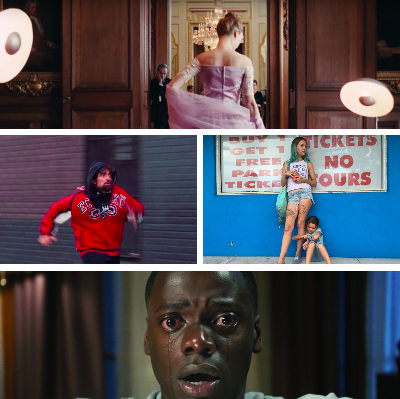
For some reason I thought I posted this a while back, but it looks like I didn’t. So here are my top 25 films of 2017, several months late.
25. The Babysitter
24. I, Tonya
23. Thelma
For some reason I thought I posted this a while back, but it looks like I didn’t. So here are my top 25 films of 2017, several months late.
25. The Babysitter
24. I, Tonya
23. Thelma


It’s almost impressive how Marvel can take a lineup of superheroes, each different than the other in terms of backstory, motivation, and powers, and render them all so bland and forgettable that they’re virtually indistinguishable. T’Challa is the latest victim of the formula, his character reduced to a bunch of thematic generalizations and halfhearted motivations while being played with the conviction of a slab of cardboard. These films simply aren’t imaginative anymore, nor do they have a structure that can avoid cheapening the vision of whatever directors they nab. Coogler is one of the more promising young directors in the business, but even he can’t prevent the political subject matter here from feeling like a collective throwaway line. Does a superhero film need to be political? Absolutely not. But if it’s going to try, then it needs to be judged on how successfully it engages with those topics beyond the surface. There’s a difference between whether a film’s socially relevant—which of course this is—and how good a film is at being socially relevant.


15. Mirror – “I, Tonya”
14. Bandage removal – “Stronger”
13. Final scene – “Life”


20. Tiffany Haddish, “Girls Trip”
19. Jessie Vinnick, “Princess Cyd”
18. Daniel Kaluuya and Allison Williams, “Get Out”


Damn, I really wanted to love this. An intense thriller/drama about grief with political undertones and an incredibly talented lead actress? Sign me up. Unfortunately, the film essentially amounts to Diane Kruger doing her absolute best to hold up a flimsy narrative. The first act is easily the strongest, throwing you headfirst into a gut-wrenching scenario defined by confusion, shock, and emptiness. However, it starts to become apparent that Akin’s screenplay isn’t all too capable of exploring its topics in the depth needed to make the story work, as the grief remains too surface level and the conflicts and politics too black and white. Don’t get me wrong, Diane Kruger knows how to kill a reaction shot. I just wish the overall structure of the film were more conducive to a complex and nuanced exploration of grief, revenge, racism, and the justice system. Akin’s decision to dilute his different filmmaking motivations across acts that are all fairly different stylistically does a disservice to each motivation and style. While I’m not completely against the direction the film goes at the end in theory–challenging endings are what I live for–I am definitely against it in the context of a poorly developed thematic narrative leading up to that point. So here, it all just ends up feeling a bit disingenuous and uncomfortable. At least Diane Kruger exists.
GRADE: B-

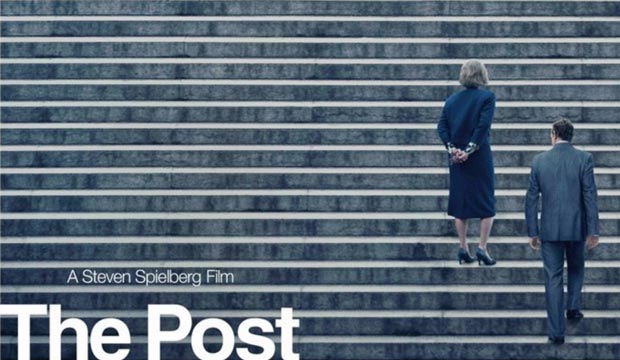
As a film about journalism, The Post is reasonably entertaining, driven by pros behind the camera and a great performance by Bob Odenkirk. As a film about Journalism, the film struggles to say what it wants to without falling into speechifying and ham-fisted messaging. I’m not going to give the film points for being “relevant to the Trump administration” or whatnot because what matters to me is the execution of that messaging. Unfortunately, the execution here leaves something to be desired. There are so many interesting angles this story can take, and many are in the film; take, for instance, the history of cozy relationships between the media and politicians and its impact on the situation at the time. It’s there, but it feels underdeveloped because it’s ultimately all in service of the safest storytelling mechanisms about capital J Journalism. I won’t judge the story for what it’s not–that is, a more in depth look at the Pentagon Papers themselves rather than a side view of sorts–because there are interesting ideas present in its chosen angle. Why, then, is it so thuddingly obvious to the point that it reduces a story about a woman in a man’s world to a scene in which that woman walks down the Supreme Court steps as a row of young women literally stare at her in awe? It’s interesting that certain arthouse films are criticized for being pretentious when a conventional film like this, one that takes no risks, imbues itself with an even bigger air of self importance. That doesn’t just apply to Streep’s storyline; it also applies to every grand statement made about the freedom and responsibility of the press.

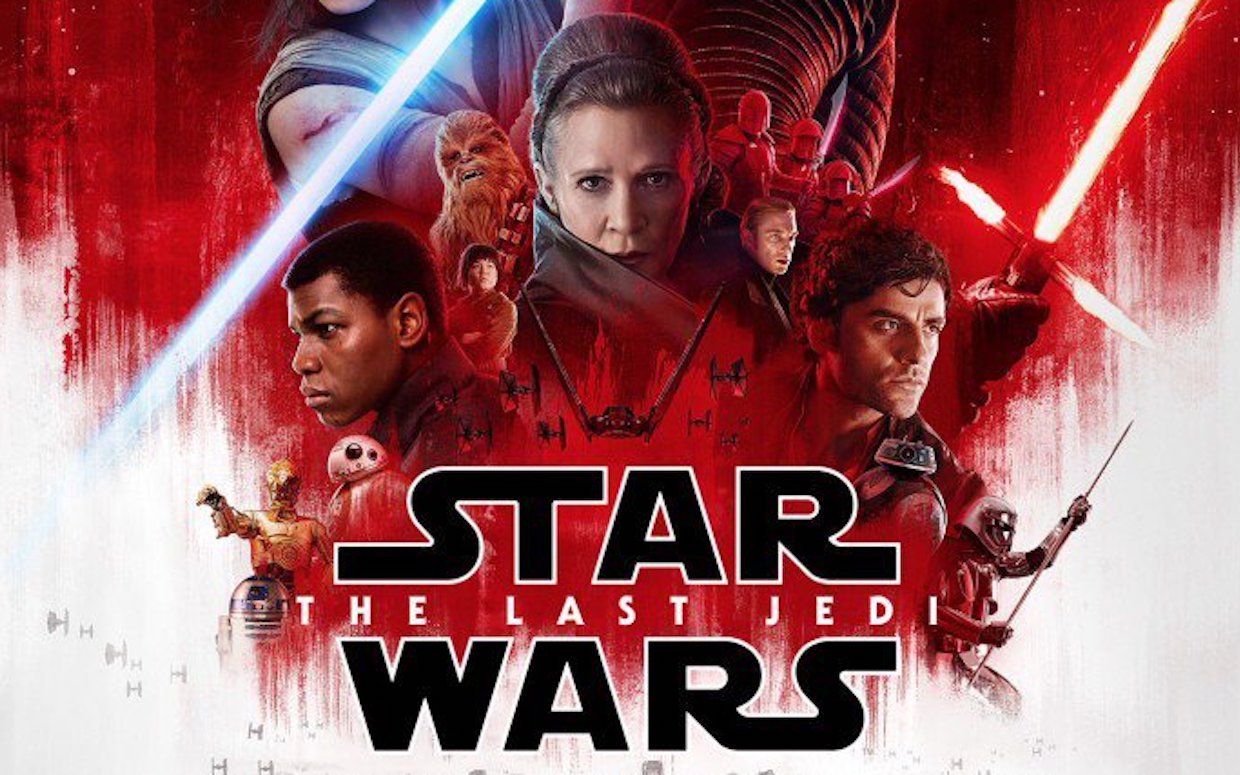
I have a fundamental problem with the very existence of these new Star Wars films. I simply don’t trust anyone to do right by this franchise…not in this day and age, not during a time defined by generic reboots and sequels, not during a time when nostalgia is nothing but a commodity repackaged into profit-guzzling machines. Maybe that’s cynical or unfair of me, but make no mistake: the three new films I’ve seen are decidedly not the Star Wars films I grew up with and loved (and I’ll even defend the prequels to the day I die). There’s a spark missing, a certain burst of originality and passion that’s sorely needed. Tell me: why haven’t we even seen a memorable lightsaber-on-lightsaber battle in three whole films? I’m not talking about Rey and Kylo Ren in a forest; I’m talking about Darth Maul’s double-sided lightsaber, or General Grievous’ four lightsabers, or Luke vs. Vader Round 1, or Luke vs. Vader Round 2, or Obi-wan vs. Anakin on a goddamn lava field. I’m talking about the visual thrill of cinema’s most iconic weapon. Where’s that magic?

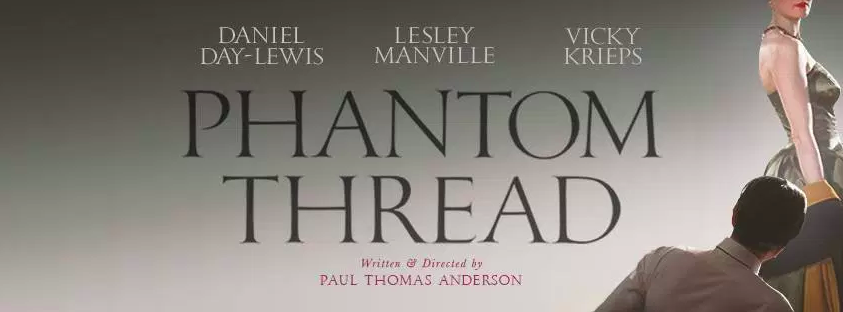
Every square inch of this film is meticulously constructed to such an extent that you’re just waiting for something to disrupt it. At times, it’s somehow dull and beautiful in equal measure, probably because each tiny, repetitive movement is shrouded in mystery but is simultaneously dangling at some type of palpable precipice. The bare-bones setup allows Anderson to slowly but surely tinker with expectations, playing with what these characters perceive to be well established as he works in and out of gothic romance, dark comedy, and impassioned drama. There are moments that linger too long and moments–especially regarding the relationship dynamics–that could use more gestation, but Anderson ultimately nails the atmosphere because he provides you just enough insight into the characters’ relationships to their environment. It’s like a psychoanalytical art project with the precision of a master chef. Jonny Greenwood’s score is haunting, evocative, an integral aspect of the mood and its own storyteller. It might just be the score of 2017.

Unfortunately both stagnant as a thriller and underdeveloped as a drama. The premise is decently promising, with an interesting story somewhere to be told about the influence of power and money on not only the decisions made by the rich, but also on the presentation of that influence in the public eye. The problem here is that any supposed deconstruction of J. Paul Getty is missing for the most part, resulting in the film continually hitting the same character note (i.e. he’s super possessive of his money) in the hopes of building tension. When the film does attempt to go for more, it doesn’t have the needed impact. It’s evident that Getty is supposed to be seen here as an enigmatic recluse of sorts, but the film absolutely needs the dynamic between Williams’ Gail and Plummer’s Getty to be fleshed out in order for the kidnapping plot to be engaging. Instead, the two are kept at a distance throughout, with each interaction feeling cursory rather than urgent while Bland Master Mark Wahlberg waltzes around with plenty of screen time. The film also spends a considerable amount of time from the kidnapped son’s perspective, which isn’t inherently problematic aside from the fact that it relies heavily on a “sympathetic kidnapper” trope that isn’t really developed either. So, what we’re left with are several disparate storylines and characters that should in theory smoothly feed into each other, but in reality create a stilted, lazy narrative. Williams and Plummer are solid, but this is overall a lot of wasted potential.
GRADE: C+

…sure, why not?
Let’s get the bad out of the way first:
1) P.T. Barnum was a loathsome human being and the way the film celebrates and rewrites what he did is contemptible.
2) The story is pretty weak. There’s nothing wrong with a simple story, but a lot of the developments here feel inorganic. The film aggressively pushes an Efron-Zendaya romance right off the bat, but it never really coalesces into anything compelling.
3) The last act in particular features a flurry of plot points that occur at a hilariously rapid pace and are thus utterly nonsensical in terms of logical, meaningful story progression and development.

 Polar Bears Watch TV