The dating scene is oftentimes a way to get a fresh start, to move on from whatever bad history you may have or whatever problems you’ve encountered in the past. However, “Wingman” suggests that no matter what you do and no matter who you do it with, the past will always, to some extent, catch up with you. It’s how you handle the situation that determines who you will be moving forward.
The first half of “Nautilus” throws us into what seems to be another “case of the week” episode, but a flip is switched at the midpoint of the hour when it’s revealed that Samaritan is behind the creation of the game Claire’s playing. Through this revelation, the writers begin to draw ideas and characterization from last week’s premiere, effectively setting up the rest of the season when all’s said and done.
“It’s not just about the numbers, Harold. It’s about survival.”
Oh, how I’ve missed you, Person of Interest. The end of season three brought with it a shift in the status quo, a shakeup that not only forced our beloved characters to obtain new identities, but also scattered them throughout the city and prevented them from moving forward as a team. As we open the fourth season, they’re all in stifling positions, trapped by the need to survive but still hungry to save lives, and “Panopticon” illustrates a group of people who truly only function when they’re working with each other.
“This was never about winning. It was just about surviving.”
No one can definitively “win” in a world that’s constantly changing, making room for new technologies and new beliefs and new lifestyles; like Root says, one can merely survive, protecting those you love and keeping yourself safe. So, as we’re ushered into the age of Samaritan, that’s exactly what Reese, Finch, Root, Shaw, and co. have to do.
“I’d like you to avoid violence if at all possible, but if they harm Grace in any way, kill them all.”
No other line sums up the character of Harold Finch better than this one does. He’s not a man of violence, but he’s capable of love, of feeling so strongly about someone that he’d truly desire to enact revenge. For, he’s now facing the inevitable consequences of his actions, and he’s willing to place himself at risk.
It’s always great to see Root back in the picture, doing what she does best. However, this episode takes the character and improves on it, adding layers and revealing truths and exploring further. By episode’s end, we’re presented with a fully fleshed out, incredibly compelling character who I only want to see more of.
After a few shaky weeks, we’re back in full force to kick off the final arc of the season. “RAM” is the perfect mixture of backstory and teaser, shading in myriad character moments and tying together myriad storylines; this is some truly impressive stuff right here.
Understandably, this episode is fairly inconsequential, and I expect a few of these before we get into the final arc of the season. Of course, as with all Person of Interest episodes, “Provenance” is still consistently entertaining.
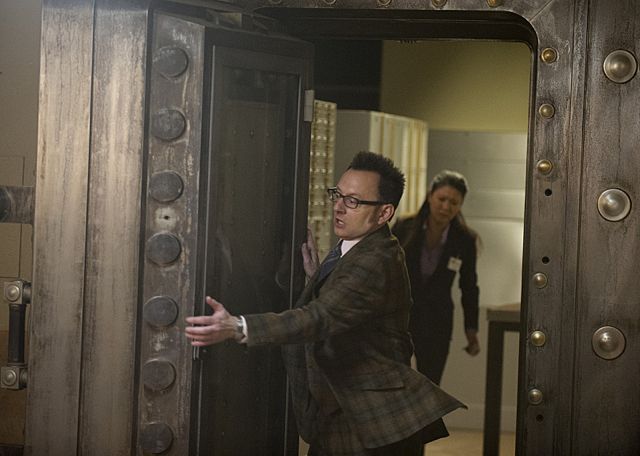
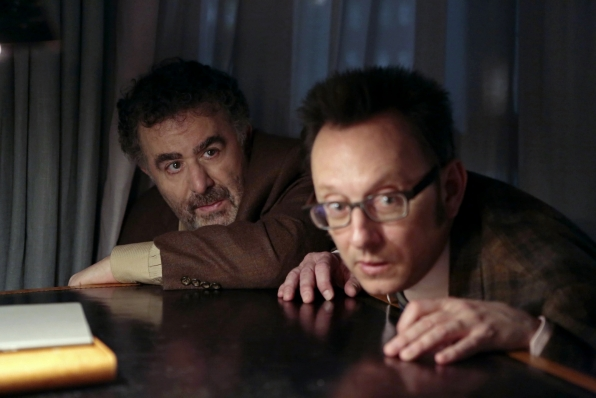
-Man, how great is Saul Rubinek in this episode? He goes through the full range of emotions–wonder, curiosity, fear, sadness, you name it–in the span of 42 minutes, and it all culminates in a truly heartbreaking scene in which the Machine acts as the gateway Finch wanted to be to his father. This whole storyline raises intriguing questions about the relationship between humanity and technology, and in Finch and Arthur’s conversation in the bank vault, we see the Samaritan tech being referred to almost as a child, a fully fleshed out being worth protecting and destroying.
-It’s really an addition to Root’s ongoing storyline with the Machine, and once again, Amy Acker blows it out of the park here. Her interactions with Control are absolute dynamite in “Aletheia”, and it’s chilling to watch her not only endure torture, but to slowly turn the tables on her torturer.
Person of Interest just wrapped up one of its best, if not the best, arcs in the show’s history, culminating in the death of Joss Carter followed by a beautiful episode dealing with the fallout of that death. The show’s been cemented as one of the best on television, and based on tonight’s events, it looks like the action won’t let up.
The present day action is interspersed with flashbacks to Finch’s early days; as usual, the two storylines are connected thematically, this time through the idea of degeneration of the brain. Finch’s father’s situation was very similar to Claypool’s in the present day, and both are connected to their own machines. It’s an interesting set-up here, and I’m looking forward to see how the show handles the clashing of two artificial intelligences. Both fill some type of emotional and personal need, but both are also targets for those looking to spin a profit. The show’s always been asking about the human cost of machines like this and whether it outweighs the benefits to be reaped from them, and it looks like we’ll get some pretty engaging debate in the weeks to come; in addition, there’s no doubt Root will fit into this somehow.
On a less thematic side, it’s nice to see the Shaw-Finch team-up here; it’s fitting that these two would be the ones to go up against Vigilance and take this case, much like it was fitting that Fusco and Carter would go up against HR. Sarah Shahi does a nice job with the subtle, small influxes of compassion amidst her seemingly steely exterior, and in fact, we see her have as close of a heart-to-heart with Diane as we’ll ever get from her. So, it’s definitely a punch in the gut when she finds out about Diane’s true allegiance, as well as Hersh’s involvement. Sadly, this is the type of world that rewards emotional detachment and lack of compassion.
Anyway, the ending makes for a pretty exhilarating cliffhanger; I’m looking forward to the new year of Person of Interest.
GRADE: B+
OTHER THOUGHTS:
-We also get a Reese-Fusco subplot, which is great because it brings together the two people that were hit the hardest by Carter’s death. It’s nice to see the lingering effects of that tragedy, and it’s a mark of a great show that it allows its characters to grow organically. Their fight at the end mirrors the one in the last episode, and while it may seem repetitive, I can see why it would arise; honestly, both needed to get that out of themselves, and Fusco’s doing it out of compassion.
-We’re back after 3 weeks, and…..we’re gone for another 3 weeks. Damn it.
-The scene in which Finch and Claypool sing the school song is pretty sweet.
-Well, this is one of the last television reviews of the year; we still have Nikita, Treme, and one more SNL to go, but this is pretty much it before our end of the year lists and thoughts. Look for those in the upcoming weeks. See you on January 7th, which is going to be a loaded night: Justified’s premiere and the returns of Brooklyn Nine-Nine, New Girl, and Person of Interest.











 Polar Bears Watch TV