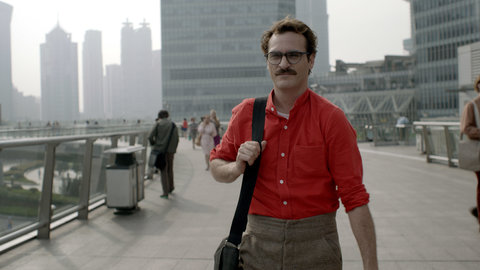
On the surface, it all may seem like nothing more than a gimmick, merely a clever twist on a generic love story that should, say, criticize the modern world’s reliance on technology or wow us with a futuristic comedy. Yet, Jonze presents a world that is very much grounded in reality; it’s more of an evolved present than an imagined future.
The film is fundamentally about evolution, whether it be that of the humans or of the operating systems. One of the great things about Her is the balance struck between the two “species”, if you will; the OSes don’t inhabit any type of body, but it seems as if they’re human; in fact, Samantha (Johansson) endures similar types of problems as Theo (Phoenix) does: a perpetual sense of loneliness, a longing to connect, a longing to enjoy and understand life. You could say Samantha is simultaneously a naive child and a mature, perceptive woman who is able to help Theo open his eyes one more time.
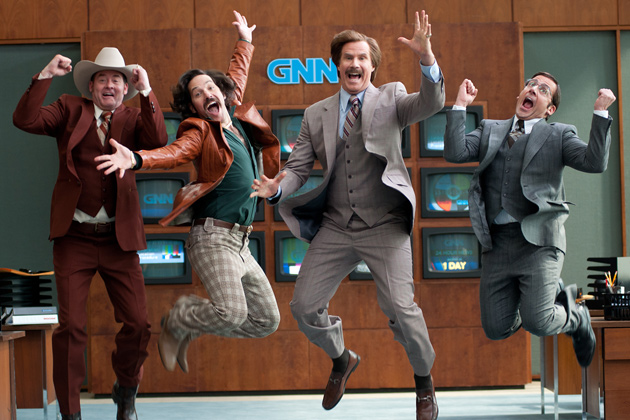
Anchorman: The Legend of Ron Burgundy was, and still is, one of the most beloved comedies in recent memory. It spawned a sequel here in 2013, and while understandably, the second movie doesn’t quite capture the magic of the first, it’s still an entertaining ride.
To be honest, this isn’t much of a ‘movie’; McKay and Ferrell seem intent on piling joke after joke and tangential subplot after tangential subplot onto the already bloated proceedings, and the comedy hits more sporadically than it does in the first; for example, when Burgundy visits Linda Jackson’s (Meagan Good) house and starts talking like the stereotypical black person, it’s more cringe-worthy than uncomfortably funny. Speaking of, the whole Linda character isn’t very well-crafted; her character shifts are too broad and strange for my tastes, and her relationship with Ron is more head-scratch worthy than funny; still, Ron’s constant barrage of “Black” is hilarious.
In general, the character work–or what passes for character work in these films–is a bit disappointing, particularly with the usage of Veronica Corningstone, an integral part of the first film. The main antagonist is James Marsden’s Jack Lime/Lame, a one-note character whose foundation is one flimsy punchline and whose poop smells like sandalwood. In addition, the news team itself stumbles a bit and is fairly inconsequential (Fantana gets to show off some condoms, though), and the movie attempts to utilize Brick Tamland a bit too much with his Chani (Kristen Wiig) subplot. He’s probably one of my favorite movie characters of all time, but here, it’s a little broad. Still, he makes me laugh every time he’s on screen–Carell’s facial expressions are priceless, and he’s especially great when he freaks out over a green screen–and that’s what counts, right?
That’s what it all comes down to here. Although the movie is nowhere near the first’s quality, it’s hilarious; the second half of the movie ramps up the insanity notch by notch, starting with an exquisite sequence where a blind Ron Burgundy raises a shark with his son and serenades it off into the waters. It all ends with a variation on the first movie’s News Team fight, one which contains Stonewall Jackson’s ghost, even crazier weapons, and Liam Neeson, Vince Vaughn, Kanye West, Marion Cotillard, Jim Carrey, Amy Poehler, Tina Fey, and Will Smith, among others. Sure, this is the very definition of broad, but I’m a sucker for random insanity, which is why the second half works for me.
Although the movie has its problems, it’s still a great way to spend your time in the theater. Ferrell and McKay understand these characters and are masters at crafting unique people, and it’s a pleasure to see them onscreen. You stay classy, Ron Burgundy.
GRADE: B
OTHER THOUGHTS
-The sequence in which Burgundy finds his news team is excellent; Champ Kind now sells fried bat, chicken of the cave, Fantana organizes video shoots of cats, and Brick is dead. This all culminates in a slow-mo RV crash that causes a bunch of bodily harm, yet at the same time does no damage to anyone.
-“By the hymen of Olivia Newton-John!”
-“Who the hell is Julius Caesar? You know I don’t follow the NBA!”
-“If you’ve got an ass like the North Star, wise men are gonna want to follow it.”
-“I can always guess how many jelly beans are in a jelly bean jar, even if I’m wrong.”
-So, the movie also attempts some satire with the whole GNN thing and Ron’s big speech at the end. I appreciate the effort, but it gets lost in the shuffle.
-One of the things I liked about the first movie was that it was inherently a personal story: Ron Burgundy’s. Here, it’s a personal story plus a bunch of others.
-I wish I could read Brick’s mind. It would probably consist of everything and nothing all at once.
-The after credits scene is nice.
Photo credit: Paramount, Anchorman 2: The Legend Continues
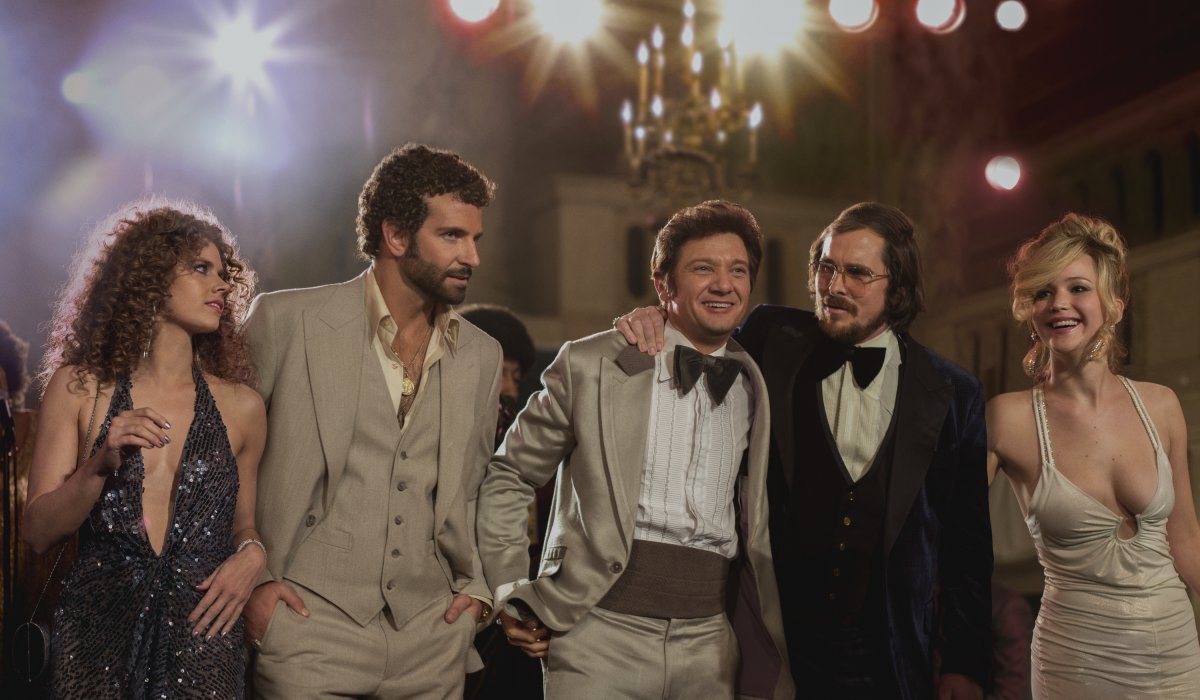
David O. Russell returns to the big screen after his Oscar-nominated Silver Linings Playbook, topping that movie in every department except dramatic payoff; in fact, dramatic payoff is essentially nonexistent in this film, one which weaves its way through a dizzying number of scenes that never really gel into a cohesive whole. Yet, Russell is excellent at providing the illusion that we’re going somewhere, a sliver of tension here and there that brings the whole situation to a precipice before immediately descending back into the comedic safe haven that permeates the film.
That’s essentially what the movie’s all about, isn’t it? All our characters are living on the edge, trying to give themselves that final push into stardom, into the lives they’re only living as fantasies right now. All the fancy clothes, the elaborate cons, the oozes of self-confidence: all part of the facade that a con man (or woman) has to put up in order to survive. In fact, Russell seems intent on using the time period to emphasize the characters’ grandiose dreams, taking on the style of Martin Scorsese–no one will top Marty, though–and his quick cuts and musical montages and whatnot. The director also plays with shifting allegiances and sympathies, so much so that sometimes the movie gets caught up in the elaborate mess of it all and it flounders.
Here’s what makes it work, though: the acting. For the whole two-hour running time, it seems as if we’re watching a very professional, complicated, and extended improv session, due to the fact that every actor just seems to be letting loose and having fun. Yet, amidst the bombastic nature of the performances, there is incredible nuance. Christian Bale and his beer belly plays Irving Rosenfeld, a con man who happens to be the moral center of the movie; credit should be given to Bale, Cooper, and Russell for drawing parallels between Rosenfeld and DiMaso (Cooper), then sending them down opposite paths without it all seeming too contrived. Jennifer Lawrence is also terrific as a woman trying to con herself, trying to make herself believe she’s in more in control than she really is. The fearless nature of her character makes her unpredictable and nearly unhinged, and Lawrence plays this perfectly.
I’d have to give Amy Adams the award for best performance, though. She plays Sydney Prosser/Edith Greensly, a British accent dropping in and out throughout the film. She’s attracted to confidence, but at times, we can see that she might have a certain lack of confidence, a feeling that she’s losing her grip on everything around her; that scares the hell out of Sydney, and there’s a particular wonderfully acted scene by Adams that I’ll mention in the spoiler section.
Ultimately, the movie leisurely strolls to its ending, robbing it of any dramatic heft, although honestly, I don’t think Russell was intending to build up to anything particularly cathartic; the film’s end reveal doesn’t exactly shock you as much as it is an “Oh, okay. Haha that’s pretty clever.” moment. What this movie is is an insanely entertaining ride that contains some of the best performances of the year; although I’d say I was a bit underwhelmed when I walked out of the theater, I was also thoroughly entertained.
SPOILER SECTION
-Robert De Niro’s cameo is brilliantly done, both spoofing his crime movie career and providing the most tension-filled scene of the film. Ultimately, though, having everything descend into violence territory wouldn’t be true to the film Russell was trying to make. Also, the one-liner right after that scene–“What are the odds an Italian guy from Miami speaks Arabic?”–is awesome, and Michael Pena is great as the Mexican Sheik.
-Louis CK. Bradley Cooper. Ice fishing.
-Certain scenes were hurt by the public’s preconceived notion that everything was supposed to be funny. For example, in the scene where Rosalyn breaks down in front of Irving, the people around us were laughing at pretty much everything that came out of her mouth. Sure, she’s mainly played for laughs, but there’s also something inherently depressing about her situation and her perpetual notion that she’s right.
-Amy Adams and Jennifer Lawrence are absolutely brilliant in that bathroom scene. Oh man, that is so well-acted.
-Now for that scene I said I would mention: Adams is amazing when she breaks down and confesses her true identity. You can see the relief and the desperation in her eyes, and it’s beautifully acted. Right after that is also one of the darker scenes in the movie; Sydney definitely felt some attraction to DiMaso beforehand, but his reaction to her confession is the tipping point; it also places the audience on her and Irving’s side, setting up that ending.
-Okay, that ending is just alright, in my opinion. Obviously, the movie never truly vindicates anyone, electing to have Sydney and Irving, while now “legitimate”, still living under an illusion. It’s fitting, but it’s also awkward.
-Carmine is a good character who’s hurt a bit by some meandering plot decisions, but he ultimately embodies the spirit of the film, and Renner is great.
END SPOILERS
-Louis CK is amazing.
-Adams and Lawrence are gorgeous, as always, and they kiss here. So there’s that.
-I can see this winning a bunch of awards; it’s a safe bet for the Academy.
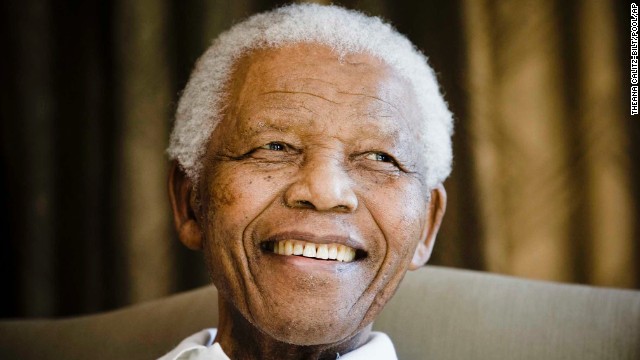
Following the death of Nelson Mandela, one of the prominent figures in the struggle against racial oppression and the sickening clutches of apartheid, Nikki Finke, former Dateline Editor and current Ignorant Hollywood Blogger, took to Twitter to express her sadness over the death of someone she saw in a movie.
The tweet reads “R.I.P. Nelson Mandela, subject of Weinstein Co’s Idris Elba-starrer ‘Mandela: Long Walk To Freedom’ which opened Nov 29 and has awards buzz.” Of course, this is an entirely reasonable reaction to the death because, you know, decades in prison isn’t nearly as exciting as special effects, and a lifelong advocacy of human rights shouldn’t garner a shiny gold statue paid for by rich old white guys staring at movie screens all day.
But hey! She also later tweeted out a rebuttal to all the people–gah, those smart, respectful people…damn them!–who were ragging on her over the tweet: “I write about the entertainment biz. And that movie is a wonderful tribute to Nelson Mandela since it’s based on his autobiography.” I suppose you could chalk it up to blatant Hollywood blogger ignorance, but…you know what? Let’s do that; she wasn’t even correct about the quality of the movie.
Anyway, we all know now how she would’ve covered the myriad deaths we’ve had: RIP John F. Kennedy, subject of “JFK”, a really long movie that smartly utilized his initials in its title. RIP Adolf Hitler, antagonist of “Schindler’s List”, which had tremendous awards buzz. New York, city plagued by pollution and an overabundance of pizza parlors, and most recently seen in Broadway commercials, was just devastated by terrorist attacks. RIP Nikki Finke, person who liked seeing Nelson Mandela on her theater movie screen.
It’s truly heartbreaking to see anyone taken from us this soon. Reports state that he was traveling in Valencia, California with an unidentified other when their car (the details are fuzzy at this time) either crashed or just plain exploded, killing both in a cruel moment of irony. The saddest part is, he was on the way to a humanitarian event; the world can be awful sometimes.
I’m not going to pretend he was my favorite actor or anything, but I thoroughly enjoyed him in the Fast and the Furious franchise, and I was definitely looking forward to the seventh. I also enjoyed Running Scared, which is definitely an underrated movie that features an underrated Walker performance. Still, putting aside his acting, he seemed like a truly humble, generous, and loving guy, and he will be missed. He’s the kind of person that never tried to revel in the spotlight because he never needed to; those are the kind of celebrities we need more of nowadays. R.I.P. Paul and whoever you were with. My thoughts are with both of you and your families.
Continuing its trend of limiting the vision of various directors and producers, the MPAA is at it again, forcing several films–The Wolf of Wall Street and Charlie Countryman–to cut scenes of people doing things that everyone does at some point: having sex. Oh, the horror! Won’t you think about the kids?! I mean, sure, we can show a bunch of people getting their heads blown off, but show a nipple? Burn it all down!
This has been a persistent problem over the years, and sadly, we’re a culture that shies away from the apparent stigma that comes with being an adult; you know, I’d say most adults don’t encounter a triple-ax wielding monster in dark alleys at night, but DO have sex. Right now, we’re worried about shielding our kids’ eyes from naked bodies, and then we’re slapping a flimsy “I’m protecting them!” excuse on our blatant transgressions. Look, I’m not adopting a “They’re going to see it eventually” attitude; that’s the last thing I want. I just implore us to be realistic about these things.
Anyway, in the case of Scorsese’s new epic The Wolf of Wall Street, some of the film’s “abundant, explicit sex” had to be cut to receive an R rating, bringing the film’s running length down to 179 minutes from its original length of 654 minutes. At least 200 of those minutes featured Jonah Hill dancing naked on top of Leonardo DiCaprio’s facial hair while Kyle Chandler smirked off to the side.
In Charlie Countryman‘s case, Evan Rachel Wood took to Twitter to rant about the MPAA’s deletion of a scene in which Shia Labeouf performed oral sex on her; no word yet on Michael Bay’s interpretation of that scene, which probably involves big robots and explosions. As for Wood’s Twitter rant, even given the site’s 140-character limit, her epic diatribe against the MPAA spanned nearly ten tweets and didn’t lose its impact. Sincere kudos to her; head to https://twitter.com/evanrachelwood to see the whole thing.
Of course, sadly, our films will continue to acquiesce to the demands of the MPAA, and eventually, we’ll see NC-17 ratings on kids movies for depicting two cartoon dogs licking each other. Or something like that.
Credit to Red Granite Pictures and The Wolf of Wall Street for all pictures. I own nothing.
The Hunger Games: Catching Fire may be trying to provide sociopolitical commentary; it may be trying to delineate the oppressive nature of an institution hungry for power; it may be trying to send the same message that the mockingjay sends to the people of Panem. It may be attempting to convey all of that, but at heart, it’s a sci fi film, and a ridiculously entertaining one at that.
The visuals are stunning here; whereas the first film sometimes tumbled into the CGI trap, Lawrence (the director Francis Lawrence, that is) and the rest of the crew have a knack for reveling in the sights and sounds without depending on it to propel the movie forward. It’s also a virtue that he abandons the shaky-cam style of Gary Ross, instead electing to linger on peoples’ faces and the action that occurs; in fact, I’d venture to say that this type of shooting helps throw me into the film more so than the shaky-cam.
Of course, those visuals are–surprising for this day and age in teenage film spectacles–secondary to the characters. Anchoring the cast is the gorgeous, talented Jennifer Lawrence (this girl is going places), conveying realistic, heart-wrenching emotions and giving life to sometimes shaky dialogue. She brilliantly portrays the internal struggle over her feelings about Peeta, and she keeps it from descending into the bowels of cliche. Some eye roll-worthy moments still exist, but the main, simple message still stands: this is a woman that may not want to lead a rebellion, but she’ll do anything to save her family.
It isn’t just her, though! The rest of the cast is stellar, starting with Donald Sutherland and Philip Seymour Hoffman, two well respected actors that I love watching, exchanging menacing one-liners without coming across as cliche. On the other side of things, the film does a great job reflecting the scope of dissent; it extends not only to the poor District 12, but throughout the land and even to the poster children of the Capitol. More depth is given to characters like Stanley Tucci’s bombastic Caesar Flickerman, Lenny Kravitz’s steady Cinna, and Elizabeth Banks’s glamorous Effie Trinket; we start to see the effects of the Quarter Quell decision written into their faces, and it’s great work all around. Woody Harrelson’s great as Haymitch, as always. As for the newcomers, they also convey those signs of rebellion very nicely; Beetee (Jeffrey Wright), Finnick (Sam Claflin), and Johanna (Jena Malone) are all integrated smoothly and quickly, and it’s a joy to watch them work.
One of the virtues of a mid-series film (although “Mockingjay” will be split into two parts, as required by the Hollywood Organization of I Love Money) is the ability to forgo backstory and lead into a final chapter. As merely a film of this classification, Catching Fire already succeeds; yet, it transcends simple Hollywood fodder and, in its stellar first half, allows us to see into the mind of Katniss Everdeen–the grade is brought down a few notches because the Games itself is a bit repetitive, although the new concept is very cool. Still, what sets this apart from, say, the Twilight series is the fact this it isn’t afraid to simultaneously convey true despair and true motivation. While the aforementioned series elects to hide behind unreality, this film is honest in its portrayal; it manages to entertain with unreality, but also continually closes its walls in on our characters so that the ending doesn’t feel very hopeful. It’s rushed, but it’s true to the book. Anyway, that’s the point; when your world is crashing down around your shoulders and all hope is seemingly lost, fortunes can change pretty damn fast. It’s all an odds game.
GRADE: B+
Credit to Lionsgate Entertainment and The Hunger Games: Catching Fire for all pictures. I own nothing.
“I’ve had a difficult time these last several years.”
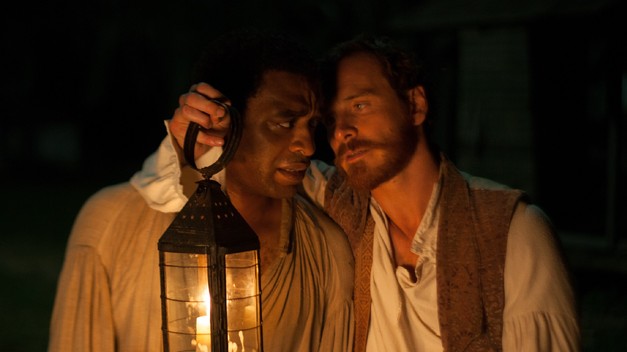
This is what true horror feels like. Steve McQueen’s brilliant take on slavery is brilliant because it’s a realistic take on it, portraying the true horrors of the slaves and the masters shackled by an institution, one which is unrelenting, unforgiving, and unfathomable. Anchored by masterful performances all around, the film is, much deserving, an Oscar treasure trove.
Speaking of Oscars, one might compare this to last year’s Tarantino epic Django Unchained, a fantastic film in its own right. Whereas that film was an idealistic, revenge fantasy, this one is realistic and brutal. Both of these movies are necessary in their own ways. Now, one might ask, “What’s the point of seeing yet another slavery film? We get it; slavery was horrible.” It’s certainly a valid question, but then again, this is a point in our history that has actually not been explored to its full extent. This film is necessary, if only to reinforce our previous notions of the atrocities committed during those times.
Still, necessary or not, it’s still an, ironically, beautiful film. McQueen’s direction is full of lush, gorgeous imagery as a backdrop to the horrors of slave life, and the camera lingers just as much on the beautiful as it does the brutal. In one of the film’s most shocking scenes, Northup/Platt is strung up by a rope, his feet barely touching the ground. What makes this scene particularly chilling is the background; as we hear Northup’s choking sounds, we also see a green background of other slaves going about their business. No other scene sums up better the true isolation of slaves in a crowd environment.
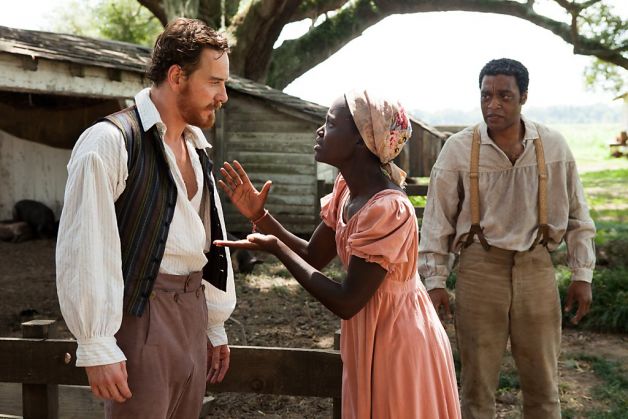
Of course, it’s not just Northup here. McQueen deftly explores the relationships that take place in the master’s home, not portraying any slaveowner as too kind or too evil. Yes, Benedict Cumberbatch’s Ford recognizes his true capabilities, but he’s just as shackled to the institution as the slaves; he’s forced to give up Northup to cut his losses. The fact that this is all instigated by Paul Dano’s vile Tibeats only serves to support the idea of men warped by the horrors of slavery, as Tibeats is a symbol of the shocking, seemingly unrealistic depths of the time. After this, we are introduced to the wonderful Michael Fassbender’s Epps, a slaveowner stripped of all moral integrity by lust and desire for power. The dynamic between him and his wife (Sarah Paulson) reflects the tension, jealousy, and brutality of the relationship extremely well. No other relationship is more horrifying, though, then Epps and Patsey’s. In a breakout performance, Lupita Nyong’o brilliantly portrays a woman not only subjected to slavery, but subjected to the dark sexual desires of a delusional maniac. The scene in which she asks Solomon to end her life is a masterpiece of acting, and the scene in which Solomon is forced to whip her is the culmination of all the horrors of the movie.
At the beating heart of it all, though, is Chiwetel Ejiofor in a role of a lifetime. He’s magnificent in every scene, whether it be in the dialogue free, lingering shot of his contemplation near the end or his interactions with Patsey. Solomon’s journey is one of a man that slowly loses hope even as he tries to keep it. He starts out as a respectable man, then is beaten and kidnapped. He keeps that hope, though, telling others that it must have all been a mistake. Then he’s taken on a ship, and his fellow slaves tell him to keep quiet and that all hope is lost. However, once he’s taken to Ford, his life starts to improve, and he tells a woman who’s lost her kids to soldier on; yet, she tells him that there’s no point. Solomon truly sees this when he’s thrown into the pit of horror that is Epps’ plantation, yet he still tries to get a white man (Garrett Dillahunt) to deliver a letter for him. That hope is crushed when Epps finds out. By the time we make our way to the end of the movie, we’ve made our way through so many reversals of fortune that even when he’s rescued, nothing feels right anymore. Did he even have hope all this time?
It is because of this that Brad Pitt’s cameo works. His is the final in a lineup of amazing actors and actresses, including Alfre Woodard, Michael K. Williams, and Paul Giamatti, and it certainly is the most distracting. Yet, it’s so surreal that it doesn’t feel triumphant when Solomon returns home. It’s a final scene of love, but it’s also a scene of uncertainty. Solomon Northup has come a long way from being Solomon Northup; he’s reunited with his family, but he’s always been Platt.
GRADE: A
Credit to FOX Searchlight Pictures and 12 Years A Slave for all pictures. I own nothing.
While on the set of Transformers: Age of Extinction, director Michael Bay was almost assaulted with an air conditioning unit, an object so random that only Michael Bay would warrant it. The story went something like this:
1. Three men were harassing the crew.
Michael Bay insert: And there were like, six explosions, and a lot of people died and the whole city blew up!
2. After Bay refused to pay the money the men were demanding, one of them tried to attack him with an AC unit.
Bay insert: And I introduced a woman character, and although she ended up being undeveloped and merely exploited for her looks, I kept her around because I like money!
3. The security team subdued the man after Bay disarmed him.
Bay insert: And I dispatched the security team because I wanted the dudes all to myself, if you know what I mean. So, after I finished having passionate sex with them, I kicked their asses and blew up a bomb somewhere! And a freaking humongous ship flew into the building! HOLY SHIT I DON’T EVEN KNOW WHAT BUILDING THAT WAS AND THE SHIP WAS THE TITANIC!
But really, this was an event clearly symbolic of Michael Bay’s tendency to ruin movies. The man demanding the money was representative of the American public as a whole, as Michael Bay really doesn’t deserve any of the money he’s made in his life.
It took a while for anyone to figure out what was going on (this was a Michael Bay thing, after all), but the good thing is that Bay escaped unscathed. That way, someone else can assault him with a bigger air conditioner.
Credit to no one for that picture, because who likes Michael Bay?
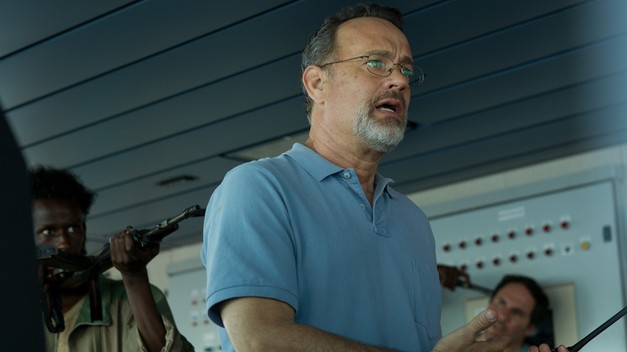
We all want to survive. That’s the essence of the film. If you don’t know the story of Captain Phillips, then go ahead and read it; it won’t take away from your enjoyment of this movie. This well-made thriller by Paul Greengrass (Bourne Ultimatum) is a fantastic tale of an ordinary man in an extraordinary circumstance.
That’s nothing new, but the film does it in a way that the ending doesn’t feel at all triumphant. All this is is a tale of survival, a tale of people that have to do what they have to do to survive in this world. The Somalian pirates know violence because that’s the only way they can make money, and the film does a nice job of humanizing them without it feeling forced. Yes, what they’re doing is terrible, but for them, it’s necessary.
The film is essentially broken down into two parts. The first consists of the pirates aboard the MV Maersk Alabama, run by a crew led by the titular character. The second consists of the pirates and Phillips in a lifeboat. They both convey a sense of horror, loneliness, and sadness. The first places the crew of the Maersk in a position where they have no way out: no weapons and no one to save them. They know the ship, but they’re trapped in the tiniest of spaces, encompassed by their own boat. The second places the pirates in the same position; they’re near their own mainland, but they have no way out. The Navy’s bearing down on them, the SEALS are standing by, and their own people have abandoned them. They’re in the tiniest of lifeboats, encompassed by their own waters.
It’s easy to tell that the film is drawing the parallels between the two groups, and while it can get a bit heavy-handed at times, Greengrass still does a great job blurring the lines of what’s right and wrong, even amidst actions that we know to be so very wrong. This works largely in part of the acting. Hanks is at his absolute A-game here, conveying the captain’s resourcefulness, compassion, and most importantly, fear; his final scene is one of the best performances I’ve seen this year. The pirates are fantastic as well, and the way Hanks plays off of them is a beauty to watch. His scenes in the lifeboat with them are claustrophobic, heartening, and devastating all at once.
The directing is great as well, although I’ve never been a fan of the shaky cam. Still, Greengrass ratchets up the tension with each subsequent sequence, ending in a long, drawn out half an hour climax.
(Spoilers)
This climax does feel a bit overlong, but it gets the job done. Phillips pushes the kid he helped into the water, once again emphasizing that need to survive. After that, we have a long sequence in which the Navy tries to rescue the captain, culminating in the dispatching of all three pirates (Phillips being in a blindfold actually has more of an effect on his psyche, as he’s a guy that needs to know what is going on. Only being able to hear those three shots is more jarring than seeing the pirates die, and Hanks conveys this beautifully). It’s overlong, that’s for sure, but the final scene of the film is gorgeous, and not in a conventional way.
Phillips is taken to a room to be looked at, and he can’t find the words to say nor the ability to keep his composure. He’s so overwhelmed by emotion, by sadness, by fear, and Hanks is perfect here in this cathartic, transcendent moment. It’s a stunning scene, and if that doesn’t earn him an Oscar nomination, I’m not sure what will.
The camera then pulls back, revealing the lifeboat in the center of all the huge Navy ships. It just shows you how small that lifeboat is, but how big Captain Phillips should feel. However, he doesn’t feel that way. Who can blame him?
GRADE: A-
Credit to Michael De Luca Producions, Scott Rudin Productions, Translux, Trigger Street Productions, and Captain Phillips for all pictures. I own nothing.

 Her is the best movie of 2013.











 Polar Bears Watch TV