Isle of Dogs Review

26 Mar

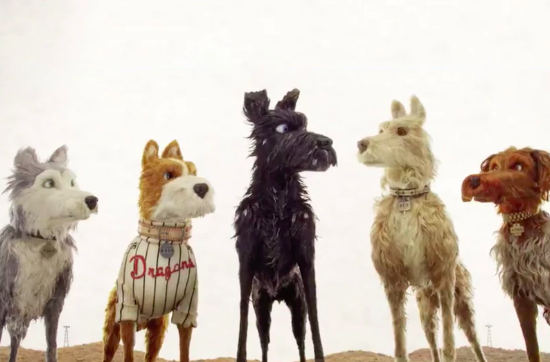
Wes Anderson is a very consistent filmmaker, but this is unfortunately one of his weaker efforts because he makes a structural miscalculation that renders the film inert for large portions of its runtime. Namely, his continued focus on the subtitled humans gets old after a few scenes, and aside from a hilarious sushi preparation sequence, those entire sections of the film feel dull and largely pointless. I get why they’re part of the script, but I have a huge problem with the execution of the themes and the ways in which the human storylines undercut the character development of the dogs. Anderson could’ve easily said everything he wanted to say, political or otherwise, without resorting to using the humans as mere dispensers rather than natural embodiments or expressions of certain ideas. Gerwig’s character in particular is a grating mess, and the film’s third act completely loses any of the tightness, emotional resonance, or childish wonder that Anderson brought to some of his other films.

Continue reading

The Top 25 Films of 2017

12 Mar

For some reason I thought I posted this a while back, but it looks like I didn’t. So here are my top 25 films of 2017, several months late.

25. The Babysitter

24. I, Tonya

23. Thelma

Continue reading

Black Panther Review

3 Mar

It’s almost impressive how Marvel can take a lineup of superheroes, each different than the other in terms of backstory, motivation, and powers, and render them all so bland and forgettable that they’re virtually indistinguishable. T’Challa is the latest victim of the formula, his character reduced to a bunch of thematic generalizations and halfhearted motivations while being played with the conviction of a slab of cardboard. These films simply aren’t imaginative anymore, nor do they have a structure that can avoid cheapening the vision of whatever directors they nab. Coogler is one of the more promising young directors in the business, but even he can’t prevent the political subject matter here from feeling like a collective throwaway line. Does a superhero film need to be political? Absolutely not. But if it’s going to try, then it needs to be judged on how successfully it engages with those topics beyond the surface. There’s a difference between whether a film’s socially relevant—which of course this is—and how good a film is at being socially relevant.

Continue reading

Game Night Review

24 Feb

A decently fun time at the movies, but in no way some kind of unsung comedy gem. Everyone in the initial game night group not played by Bateman or McAdams is fine but ultimately unnecessary, with exhibit A being a running joke about sleeping with a celebrity. Additionally, the film is a bit too haphazard with its twists and tones, but not in the “controlled madness” way I love. Michael C. Hall probably should’ve had more to do.

When it’s funny, though, it’s funny. Bateman and McAdams share a fantastic scene revolving around a bullet removal, and Plemons delivers some great deadpan. I have at least four other Kyle Chandler performances I’d choose over this one, but I think people are finally realizing that he can be a hell of a lot of fun. That sly grin worked wonders in The Wolf of Wall Street.

GRADE: B-

The Top 15 Film Scenes of 2017

25 Jan

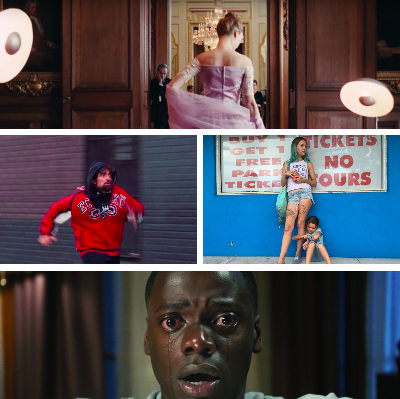
15. Mirror – “I, Tonya”

14. Bandage removal – “Stronger”

13. Final scene – “Life”

Continue reading

The Top Film Performances of 2017

19 Jan


20. Tiffany Haddish, “Girls Trip”

19. Jessie Vinnick, “Princess Cyd”

18. Daniel Kaluuya and Allison Williams, “Get Out”

Continue reading

The Top 20 Television Shows of 2017

13 Jan

20. Dear White People

19. Master of None

18. Black Mirror

Continue reading

In the Fade Review

11 Jan

Damn, I really wanted to love this. An intense thriller/drama about grief with political undertones and an incredibly talented lead actress? Sign me up. Unfortunately, the film essentially amounts to Diane Kruger doing her absolute best to hold up a flimsy narrative. The first act is easily the strongest, throwing you headfirst into a gut-wrenching scenario defined by confusion, shock, and emptiness. However, it starts to become apparent that Akin’s screenplay isn’t all too capable of exploring its topics in the depth needed to make the story work, as the grief remains too surface level and the conflicts and politics too black and white. Don’t get me wrong, Diane Kruger knows how to kill a reaction shot. I just wish the overall structure of the film were more conducive to a complex and nuanced exploration of grief, revenge, racism, and the justice system. Akin’s decision to dilute his different filmmaking motivations across acts that are all fairly different stylistically does a disservice to each motivation and style. While I’m not completely against the direction the film goes at the end in theory–challenging endings are what I live for–I am definitely against it in the context of a poorly developed thematic narrative leading up to that point. So here, it all just ends up feeling a bit disingenuous and uncomfortable. At least Diane Kruger exists.

GRADE: B-

The Top 101 Songs of 2017

8 Jan

Rules: Only two per artist (not including features). So yes, that makes this not my true top 101, but I do like all of these songs and think variety is very important in any songs list.

101. Jens Lekman feat. LouLou Lamotte, “To Know Your Mission”

100. Beach Fossils, “This Year”

99. Laura Marling, “Always This Way”

98. Mogwai, “Coolverine”

97. Moses Sumney, “Lonely World”

96. Spoon, “Can I Sit Next To You”

95. Kelela, “LMK”

Continue reading

The Post Review

7 Jan

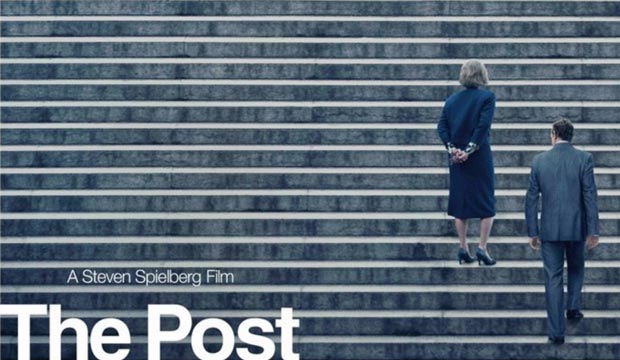
As a film about journalism, The Post is reasonably entertaining, driven by pros behind the camera and a great performance by Bob Odenkirk. As a film about Journalism, the film struggles to say what it wants to without falling into speechifying and ham-fisted messaging. I’m not going to give the film points for being “relevant to the Trump administration” or whatnot because what matters to me is the execution of that messaging. Unfortunately, the execution here leaves something to be desired. There are so many interesting angles this story can take, and many are in the film; take, for instance, the history of cozy relationships between the media and politicians and its impact on the situation at the time. It’s there, but it feels underdeveloped because it’s ultimately all in service of the safest storytelling mechanisms about capital J Journalism. I won’t judge the story for what it’s not–that is, a more in depth look at the Pentagon Papers themselves rather than a side view of sorts–because there are interesting ideas present in its chosen angle. Why, then, is it so thuddingly obvious to the point that it reduces a story about a woman in a man’s world to a scene in which that woman walks down the Supreme Court steps as a row of young women literally stare at her in awe? It’s interesting that certain arthouse films are criticized for being pretentious when a conventional film like this, one that takes no risks, imbues itself with an even bigger air of self importance. That doesn’t just apply to Streep’s storyline; it also applies to every grand statement made about the freedom and responsibility of the press.

Continue reading